
Graphene vs. Ceramic Coatings: Which Protection is Right for Your Vehicle?
By Isaac Dykstra | Dykstra Detailing
If you’ve been researching how to protect your vehicle’s paint, you’ve likely run into two major buzzwords: Ceramic and Graphene.
Is Graphene just a marketing gimmick? Is Ceramic "old news"? The truth is, they are both incredible forms of protection, and in modern detailing, they often work together. At Dykstra Detailing, we offer both pure Ceramic options and advanced Ceramic-Graphene hybrids.
Here is the breakdown of the science so you can decide which shield is right for your ride.

1. The Standard: Ceramic Coatings (SiO2)
Ceramic coatings have been the gold standard for years. They are based on Silicon Dioxide (SiO2)—essentially liquid quartz. When applied to your paint, they harden into a glass-like shell.
The Strength: Hardness. Ceramics are fantastic at resisting light scratches (swirl marks) and UV oxidation.
The Look: They provide that "candy-like" high-gloss finish that makes your car look wet.
The Weakness: Ceramics tend to retain heat. In the summer, a hot hood can bake water droplets into the surface, potentially causing "water spots" if you aren't careful.
2. The Evolution: Graphene Coatings
Graphene is a carbon-based nanomaterial that is famous for being incredibly strong and thin. In the detailing world, we typically use Graphene Oxide.
The Science: Graphene reduces heat on the surface of your paint. By dispersing heat faster than pure ceramic, it lowers the surface temperature of your hood and roof.
The Benefit: Less Water Spotting. Because the surface stays cooler, water evaporates more slowly and is less likely to etch into the clear coat. This is a massive advantage for vehicles parked outside in the Michigan summer.
The "Anti-Static" Bonus: Graphene has conductive properties that repel dust. This means your car stays cleaner for longer between washes compared to a traditional ceramic or wax.

3. The Best of Both Worlds: The "Hybrid" Coating
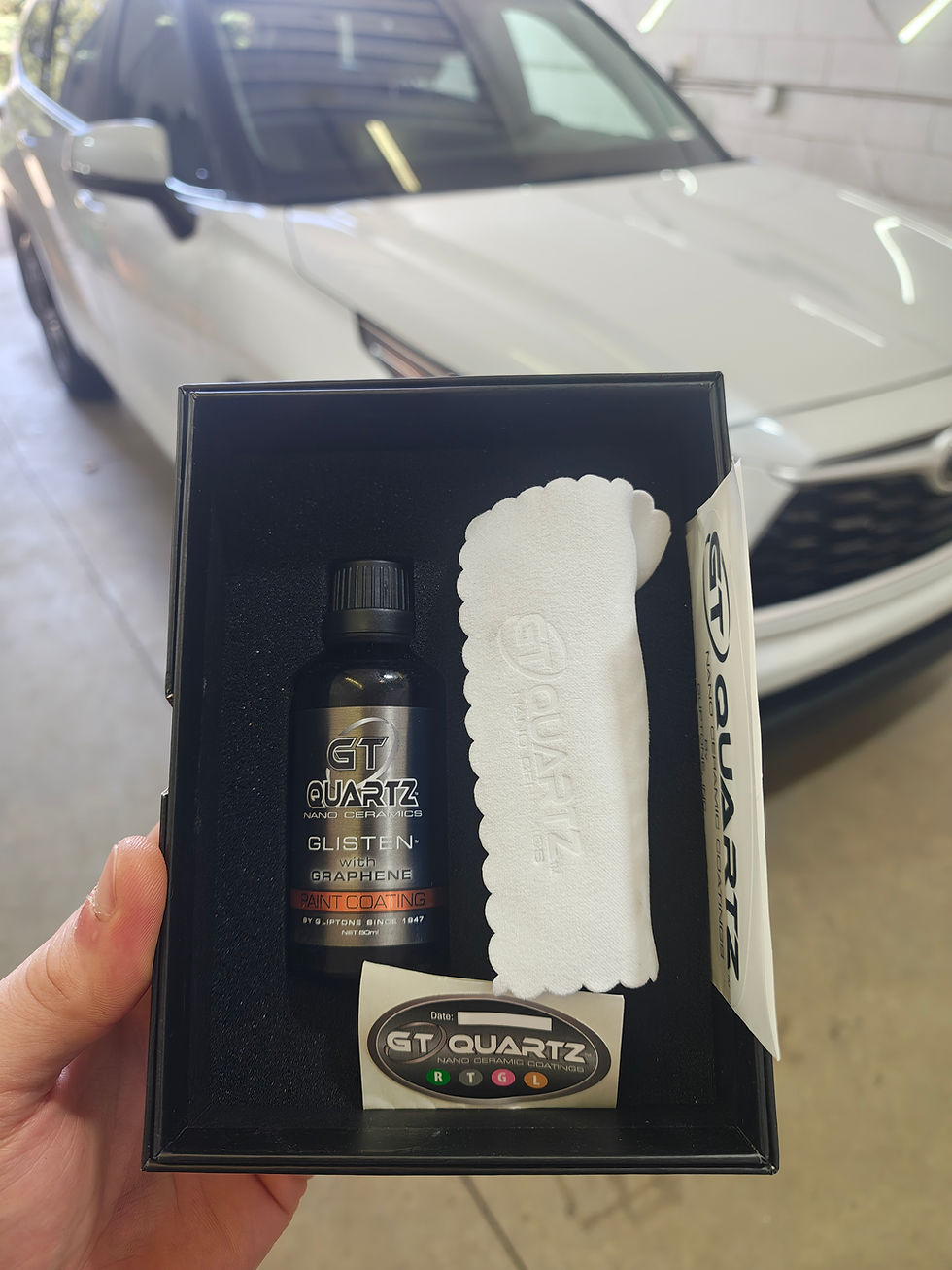
It’s important to know that most "Graphene" coatings on the market—including the professional-grade ones I use—are actually Ceramic molecules infused with Graphene.
This isn't a bad thing; it's the perfect marriage of chemistry.
You get the durability and bonding of the Ceramic backbone.
You get the slickness, heat resistance, and water-spot reduction of the Graphene additive.
So, Which One Do You Need?
When you book a Paint Correction & Protection package with me, we will discuss your specific habits to pick the right formula.
Choose Standard Ceramic (SiO2) If: You have a garage-kept weekend toy or a show car. You want the absolute maximum "hard candy" gloss and don't worry much about rain or hard water sitting on the paint.
Choose Graphene (or Graphene-Infused) If: Your vehicle is a "Daily Driver." If your truck sits outside at work, or if you live on a dirt road where dust is an issue, the anti-static and water-spot resistant properties of Graphene make it the superior choice for a low-maintenance lifestyle.


The Dykstra Bottom Line
Whether you go with a traditional Ceramic or a modern Graphene blend, the most important factor isn't the bottle—it's the prep work. No coating can bond to dirty paint. That’s why every coating package I offer starts with a surgical Decontamination and Paint Correction to ensure your investment lasts for years, not months.


Comments